Self-protection: a culture that goes beyond the emergency backpack
An old practice for a different environment
Over the past few months, recommendations for disposing of basic supplies at home have gained visibility. The European Union has incorporated citizen self-reliance for the first 72 hours into its Preparedness Strategy, while countries like the UK, the Netherlands, Norway, Japan, or Mexico have launched campaigns to promote domestic reserves and family emergency plans.
These initiatives have reopened the debate about the usefulness of survival kits and, in some cases, fueled alarmist interpretations of why they are being distributed. However, home preparation responds to a much older practice of family resilience.
For generations, many households have maintained a medicine chest, a canned food pantry, some water bottles, candles, batteries, or a flashlight. They were usual resources to deal with unforeseen events, from supply cuts to adverse weather events, the collection of which was incorporated into the daily organization of housing. The emergency backpack recovers that same logic: having some basic resources to cover immediate needs.
What has changed is the environment. Digitalization and infrastructure interdependence have transformed everyday life’s vulnerabilities. Access to water, food, sanitation or means of payment depends, to a greater or lesser extent, on systems whose continuity is usually taken for granted. An interruption may have effects that extend beyond the service initially affected.
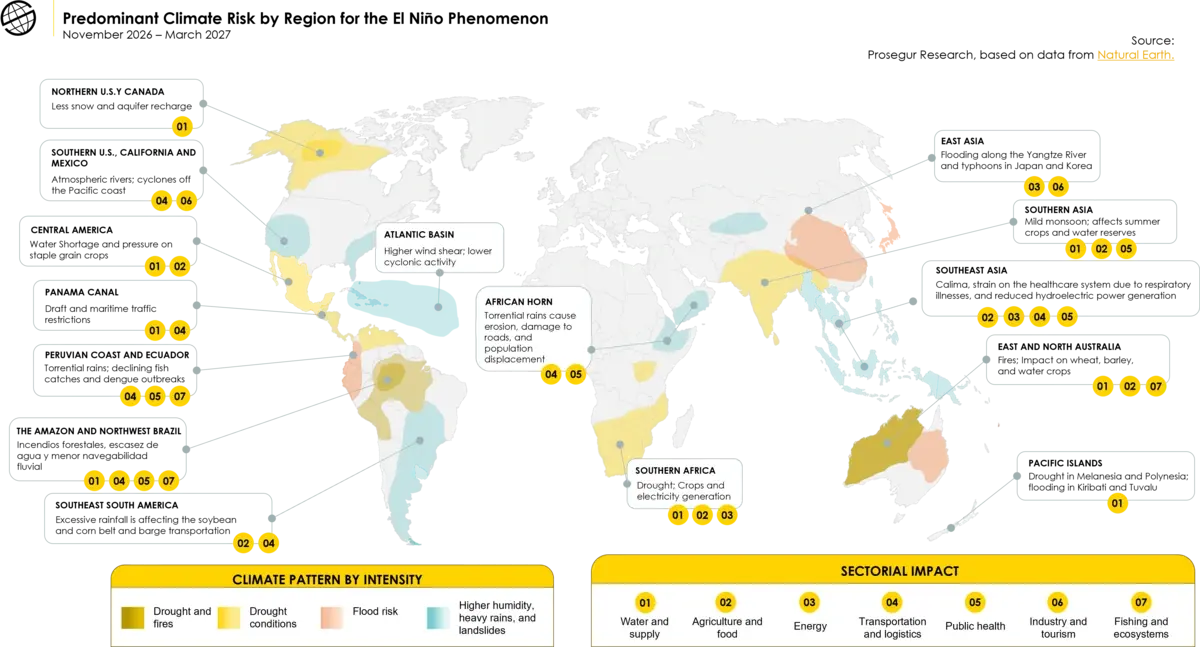
This dependence is compounded by exposure to extreme weather events. The El Niño episode of 2026-2027, whose strengthening is envisaged in the forecasts of the World Meteorological Organization. Although its effects vary geographically, it can alter temperature and precipitation patterns and increase certain risks from extreme heat, drought, and flooding in different regions that may temporarily compromise access to supplies, communications, and mobility.
In the digital realm, the expansion of connected services has increased the exposure of organizations and infrastructures to cyber incidents. An impact on communications, transport, energy or financial services can lead to difficulties in accessing routine services that we take for granted.
The nature of these risks is different, but both contexts highlight the importance of having alternatives when everyday services are disrupted.
Self-protection starts before the emergency
Preparing involves knowing the risks of the environment and anticipating how they may affect each household. A flood, fire or power outage requires different responses. Therefore, the general recommendations must be adapted to the characteristics of the territory, family circumstances and indications from the authorities.
In some scenarios, the priority will be to stay in the house; in others, evacuate and extract as soon as possible. It will also be necessary to foresee how to act if communications, travel or access to certain services are disrupted. These decisions require some prior planning, especially when there are minors, elderly people, persons with reduced mobility or pets.
Knowing the evacuation routes, establishing a meeting point and agreeing on how to contact family members if the networks stop working are measures that can facilitate the response. Civil protection recommendations and official warning systems are an essential reference point for guiding these decisions and integrating individual preparedness into collective security.
The kit: a tool, not a guarantee
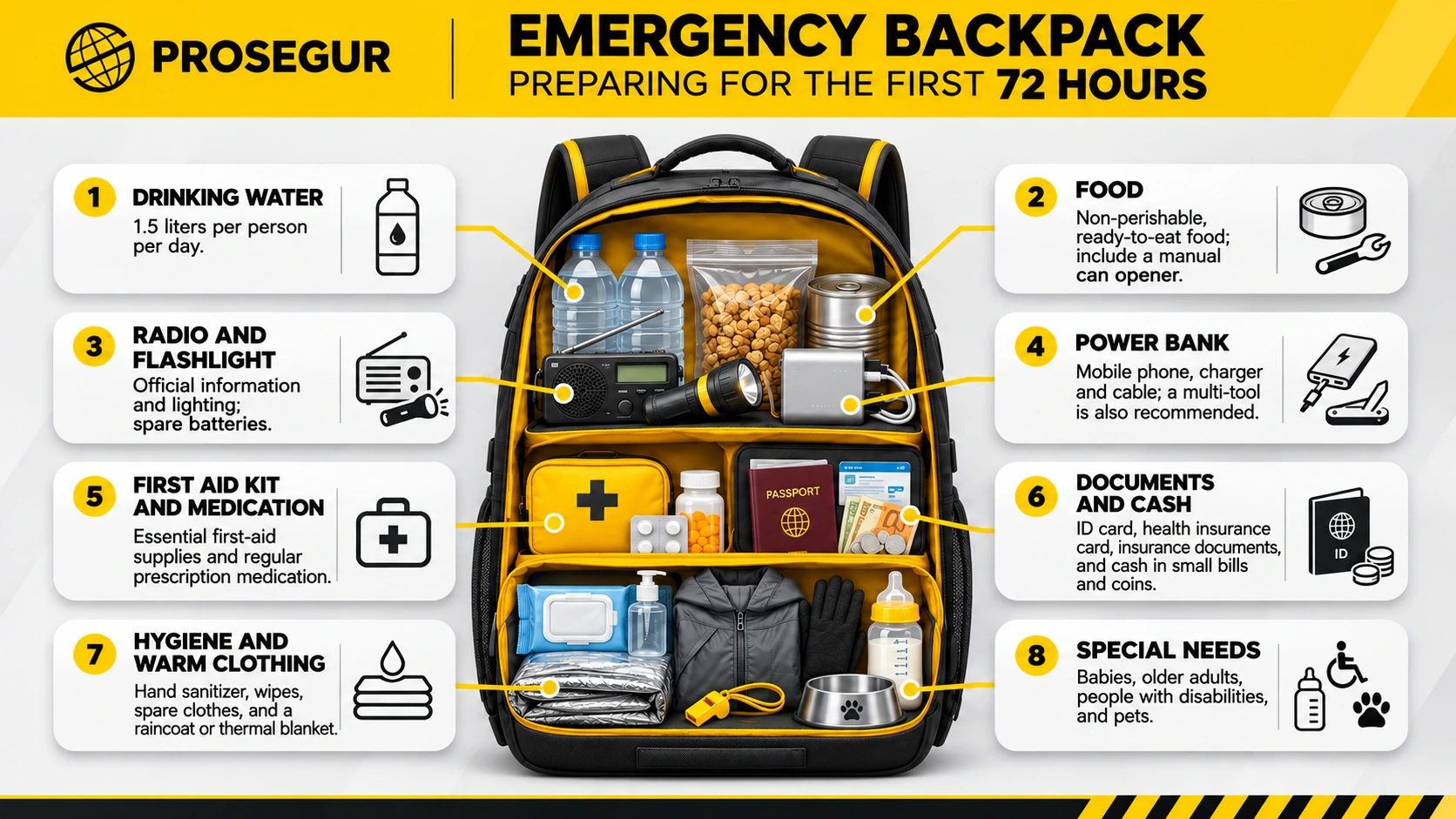
The recommendation to have supplies for the first 72 hours provides a practical horizon for organizing home preparation. Its application can take different forms depending on the function that resources should perform: facilitate an evacuation, face a disruption of services in the housing or respond to an incident during a displacement.
For an evacuation, a light backpack with water, easy-to-eat food, documentation, medication, a flashlight and an external battery may be useful. Instead, when home services are interrupted for long periods, water supplies, non-perishable food items, hygiene products, and other basic supplies become more important. The vehicle may, in turn, require specific elements for travel and weather conditions.
However, the usefulness of such equipment deserves critical consideration. The scientific evidence on their direct contribution to disaster survival and recovery remains limited. A review published by Tara N. Heagele in 2016 already noted the paucity of empirical studies to establish its effectiveness.
Another study published in 2025 based on the lessons drawn from Hurricane Ian provides another relevant element. On a sample of 1,342 households, researchers did not identify a statistically significant association between having an emergency kit and reducing the need to leave home for medication or health care in the days following the disaster. The result points to a major constraint: stockpiling supplies may facilitate the initial response, but their availability alone does not guarantee the services needed to cope with a protracted emergency.
Therefore, equipment should be understood as a support resource within a broader preparation. Keeping supplies up to date, checking expiration dates and checking the status of batteries allows them to remain useful when needed.
Self-protection is about incorporating foresightedness into everyday life and understanding how to act when services on which we depend are disrupted. The backpack can be a tool of that preparation; preventive culture is what makes it meaningful.
-
Self-protection: a culture that goes beyond the emergency backpack
November 10, 2026
-
El Niño 2026–2027: The Global Map of Climate Risks
November 5, 2026